

If you already know your ryoba from your dozuki, this one's for you — a deeper look at the actual specs that separate a good saw choice from a frustrating one: blade thickness, tooth pitch, and whether the blade has "set."
Blade thickness
Thickness affects cutting performance, kerf width, and how stiff the blade feels in the cut.
- Up to 0.4mm — precision work. Narrow kerf, smooth cutting with minimal resistance, and a thinness that's genuinely unique to Japanese pull saws. Ideal for delicate, detailed cuts.
- 0.5–0.7mm — general woodworking. The sweet spot between stiffness and sharpness, versatile enough for most tasks you'll throw at it.
- 0.8mm and up — pruning and rough cutting. High stiffness, larger teeth, built for heavy-duty work rather than finesse.
Tooth pitch (TPI)
Pitch — teeth per inch — works like sandpaper grit: fewer, coarser teeth cut faster but rougher; more, finer teeth cut slower but leave a cleaner finish.
- Up to 10 TPI — pruning and rough cutting. High cutting power, catches easily, rougher cut edges. Good when you need material gone quickly and finish doesn't matter.
- 12–20 TPI — general woodworking. A good balance of cutting power and control, versatile across most applications.
- 25 TPI and up — precision work. Slower going, but a smooth pull and a genuinely clean cut — worth the extra time for delicate joinery.
Does the blade have "set"?
"Set" refers to teeth bent slightly outward from the blade to stop it binding in the cut. It makes cutting easier, but tends to leave more visible marks on the cut surface than a blade without set — worth knowing if the finish of the cut matters as much as the cut itself.
Matching saw type to the job

Ryoba (double-edged saw) — rip teeth on one side, crosscut on the other. General woodworking's great all-rounder; having just one ryoba covers a huge range of projects.
Dozuki (backed saw) — an ultra-thin blade with a rigid spine for support, built for precision. Minimal cutting width and a clean finish make it the go-to for fine joinery like kumiko lattice work.
Azebiki (scribing saw) — a curved blade tip that can start a cut from flat, mid-surface — useful for cutting stop-grooves or working into a wall.
Keyhole saw — a long, narrow blade for curved cuts and cutouts a flat blade simply can't manage, especially handy in tight spaces during furniture repair.

Folding saw — a foldable blade built around portability and safe storage, easy to toss in a bag and carry outdoors.
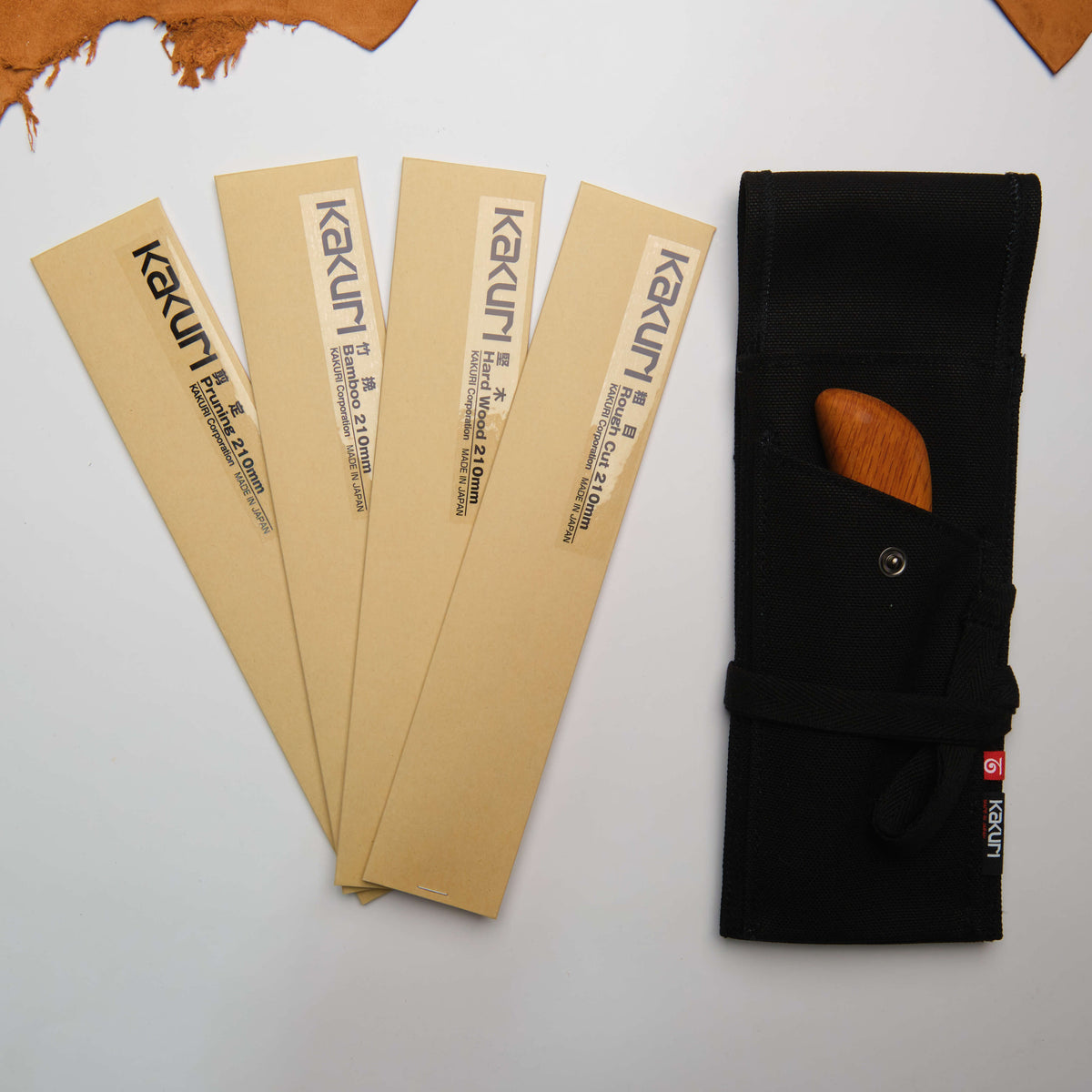
Pruning saw — large teeth and aggressive set designed specifically for green wood, which clogs standard blades fast. A dedicated pruning saw keeps cutting fast and comfortable where a general-purpose blade would bog down.

Spare-blade multi-purpose saw — one handle, several interchangeable blades for different materials. A genuinely practical option if you want one tool that handles woodworking, gardening, and the odd bit of trash disposal without owning five separate saws.
Which one should you actually buy?
If you only want one saw and aren't sure what you'll be cutting, a 240mm ryoba is the safest, most versatile starting point. If your work is mostly fine joinery, add a dozuki. If you're cutting green wood in the garden as often as timber in the workshop, a pruning saw earns its keep fast — and if you'd rather not commit to a drawer full of single-purpose saws, a spare-blade multi-purpose set covers a surprising amount of ground from one handle.


