

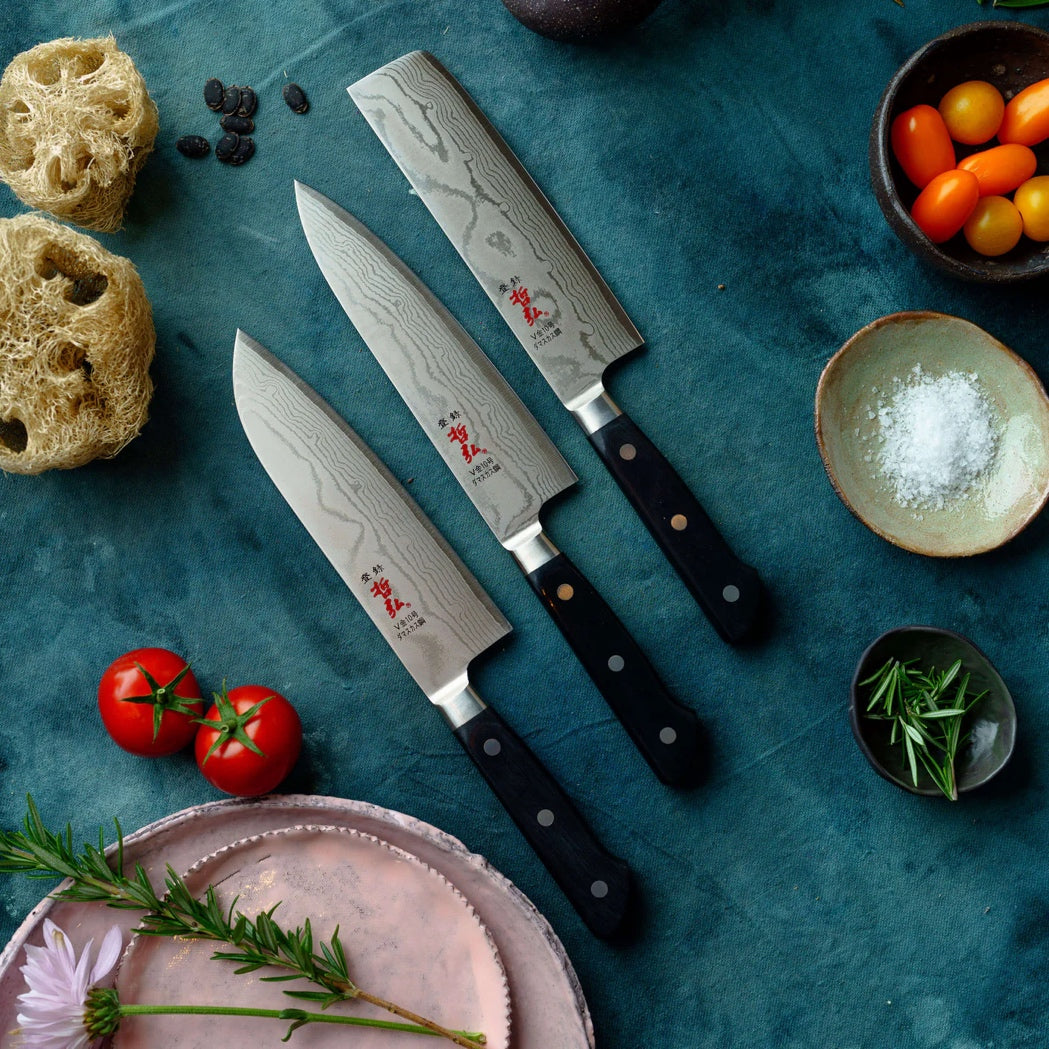
Japanese knives are basically the Pokémon evolution chart of kitchen tools. Every shape exists because some chef, somewhere, got very serious about slicing one specific thing perfectly.

One of the defining features of Japanese knives is that many of them were developed for a specific ingredient or task. So over time, knife makers kept tweaking designs until each knife became ridiculously good at one thing.
Basically, different kitchen jobs need different movements: fish needs smooth, clean slicing; vegetables need straight, precise chopping; meat needs longer cuts with less tearing; and tiny ingredients need delicate control.
A thicker blade offers more strength for preparing fish. A flatter edge helps cut vegetables cleanly on the board. A long, narrow blade allows for smooth slicing in one motion.
It's not just aesthetics either. Japanese knives are all about how they move. The shape changes the cutting motion, the balance, the control, and even how smug you feel while slicing cucumbers.
And honestly? Once you start noticing the differences, you suddenly understand why certain knives feel especially natural and useful in the hand, and why knife enthusiasts own seventeen blades and speak about steel hardness like wine experts.
Let's look at our favourite four styles
Santoku — The Reliable All-Rounder
The Santoku is the knife that quietly carries most home kitchens without demanding attention.
Its name means "three virtues," which sounds mystical, but basically means it's good at slicing, dicing, and chopping. The culinary equivalent of someone replying "happy to help" in every group chat.

Shorter and easier to handle than a Gyuto, the santoku feels approachable and friendly. It's the knife people buy when they want one dependable tool that won't accidentally make them feel like they're auditioning for a samurai movie.
For everyday cooking, the Santoku is the absolute workhorse!
Gyuto — The Main Character Energy
The gyuto is the knife equivalent of someone who's good at literally everything and somehow still humble about it.
Longer, sharper, and more versatile, this is the knife many chefs reach for when they want speed and precision. It handles meat beautifully but also crushes vegetable prep like it has something to prove.
It's the closest thing Japanese knives have to a chef's knife superhero.
If the santoku is your reliable hatchback, the gyuto is the sports car that somehow also has great fuel economy.
Nakiri — The Vegetable Executioner

The Nakiri doesn't care about meat. It has one passion in life: turning vegetables into neat little pieces at alarming speed.
Its straight edge makes full contact with the cutting board, meaning cleaner cuts and fewer half-cut carrots rolling around your kitchen like escape artists. It's precise, efficient, and deeply satisfying to use.
Using a Nakiri makes meal prep feel weirdly satisfying. Suddenly, you're chiffonading herbs like you host a cooking show nobody asked for.
Petty Knife — Tiny But Dangerous

Tiny? Yes. Useless? Absolutely not.
The petty knife is the sidekick that quietly carries the whole team. Peeling strawberries, trimming herbs, slicing garlic, opening random snack packets when you can't find scissors — this little knife is always there.
It's nimble, easy to control, and weirdly addictive to use. Once you own one, you suddenly start reaching for it constantly.


