
Meet your teacher

Hiroshi Yamaguchi

Furniture designer and maker · KOITOYA Design/Make/Teach, Canberra

Hiroshi Yamaguchi trained in Takayama, Gifu, and spent more than a decade making furniture and teaching woodwork in Japan before moving to Canberra in 2012. In 2016 he founded KOITOYA Design/Make/Teach, where he makes commissioned furniture, wood craft and joinery, and runs woodwork classes.

He studied forestry before furniture, and still looks for sustainable, locally sourced timber, including Canberra's street trees. He has taught at JTA every year since 2018.

Hiroshi Yamaguchi, furniture designer and maker, KOITOYA
  • 1995began training at Shinrin Takumi Juku, Takayama
  • 10 yearsfull-time lecturer, Gifu Academy of Forest Science and Culture
  • 2016founded KOITOYA Design/Make/Teach in Canberra
  • Since 2018teaching at Japanese Tools Australia

Tekizai tekisho

The right person for the right position

“This traditional proverb comes from carpentry. It refers to the skill of using the right timber in the right place in a building. My teacher used these words often in my apprentice days, to explain why you need to understand the character of each timber and how to use it.

Traditional Japanese design and skills inspire contemporary artists and designers, including me. They're part of my day-to-day practice as a furniture designer and maker in Canberra.”

In Hiroshi's words

KOITOYA designs and the Ryurei table

Training in Takayama

“In 1995 I began my woodcraft training at Shinrin Takumi Juku, a private woodwork school in Japan, under the master craftsman Osamu Shoji. The school is in Takayama, Gifu, a quiet traditional town with a long history of woodworking, from temple building to urushi lacquerware, fine crafts and furniture.

I knew nothing about furniture making when I started, but I quickly became devoted to making bespoke furniture that reflects the natural shapes and patterns of wood. Those two years were busy: studying as an apprentice and learning every aspect of timber, woodworking and design by hand.

Afterwards I worked as a furniture maker in Melbourne and as a forestry worker in Gunma and Saitama. Then I spent ten years as a lecturer at the Gifu Academy of Forest Science and Culture, teaching the character of timber, woodwork practice, and working with communities on sustainable timber projects.”

Felling a tree for the Mono Mori sustainable hardwood network in Gifu
Hiroshi's forestry work with the Mono Mori network in Gifu

Connection

“In 2012 I moved to Canberra with my family, and in 2016 I set up my own workshop, KOITOYA Design/Make/Teach. Each piece I make is unique, but one theme runs through all my work: connection.

It starts with connecting to people's needs. The most important starting point for me is to listen and work from the customer's story. I also want to connect my skills and knowledge of timber to the design, and I believe it's my role to connect to the responsible use of forest materials. My background in forestry leads me to look for sustainable, locally sourced timber, including street trees.

When I present my work, I want to tell the story of where the timber came from and how it arrived in my workshop, and the cultural experiences, trees and people behind it.”

Hiroshi Yamaguchi working at the bench in the KOITOYA workshop
The KOITOYA workshop

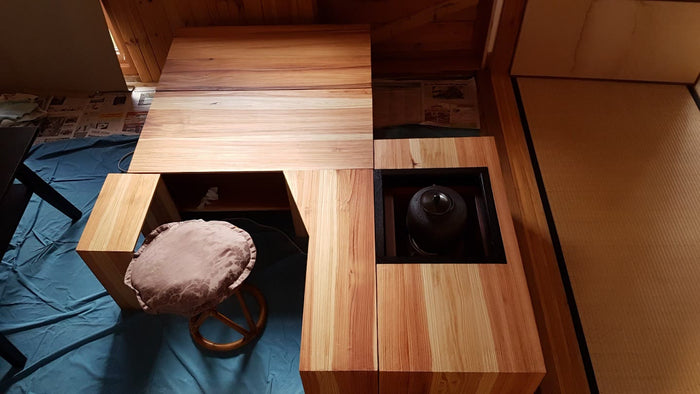
The Ryurei tea ceremony table (2018)

“The Ryurei table set was made for Ryoko Freeman, a tea ceremony teacher. She needed a Ryurei-style table, which sits off the floor, that could be taken apart and set up when needed. The design built on an earlier table for Kyoko McKay, another tea ceremony teacher in Canberra. Both had clear ideas about how it should work.

The table had to suit the seasonal changes in utensils, be light enough to set up and put away, and be sized exactly to fit a tatami-sized room. The ro, the sunken hearth, was unusual: it sits on the top edge of the table, open on one side, and needs an authentic lid for summer when it isn't used. Ryoko and I worked out the solution together by email. It's a very satisfying part of design to have the customer involved like that.”

Ryurei tea ceremony table set in Japanese sugi cedar
Ryurei table set in Japanese sugi cedar
Ryurei tea ceremony table in sugi with the sunken hearth set into its edge

Sugi, finished by hand

“I had a stock of sugi (Japanese cedar), a common timber in Japan that can be anything from cheap building material to precious yaku-sugi or refined shoji screens. It's very light, which suited a portable table, but too soft for a tabletop. So I used a traditional uzukuri finish: a wire brush removes the soft spring wood and leaves the hard autumn wood. The surface no longer worries about small scratches, and the grain gains depth and texture.

I used quarter-sawn masame grain for its stripes, simple straight lines, and mitre joints on the corners at 45 degrees, so the edges almost disappear. The design is simple and subtle, but I believe it shows what sugi does well.”

A tree from the National Arboretum

“The final part of the story is the tree itself. This sugi grew at the National Arboretum in Canberra, but had to be cut down after the 2003 bushfires burnt much of the Arboretum. It was saved and milled by Gordon Smith, an enthusiastic timber miller and joiner. Without people like Gordon, this sugi wouldn't have come into our lives.

I'm very grateful that this Japanese tree, which grew up in Canberra, wasn't lost in the fire but found a second life serving tea and welcoming guests with tea ceremony masters, and to be part of that story through my hands and tools.”

Tea ceremony teacher Ryoko Freeman serving tea at the Ryurei table
Ryoko Freeman welcoming Hiroshi with tea at the Ryurei table

Visit the workshop

“I work in a small studio in Oaks Estate, an urban village between the Molonglo and Queanbeyan rivers near an old railway bridge, about 12 kilometres from Canberra. It's a creative incubator for much of my work. Please visit when you come to Canberra, to see my work and smell the wood shavings.”

Visit koitoya.com.au

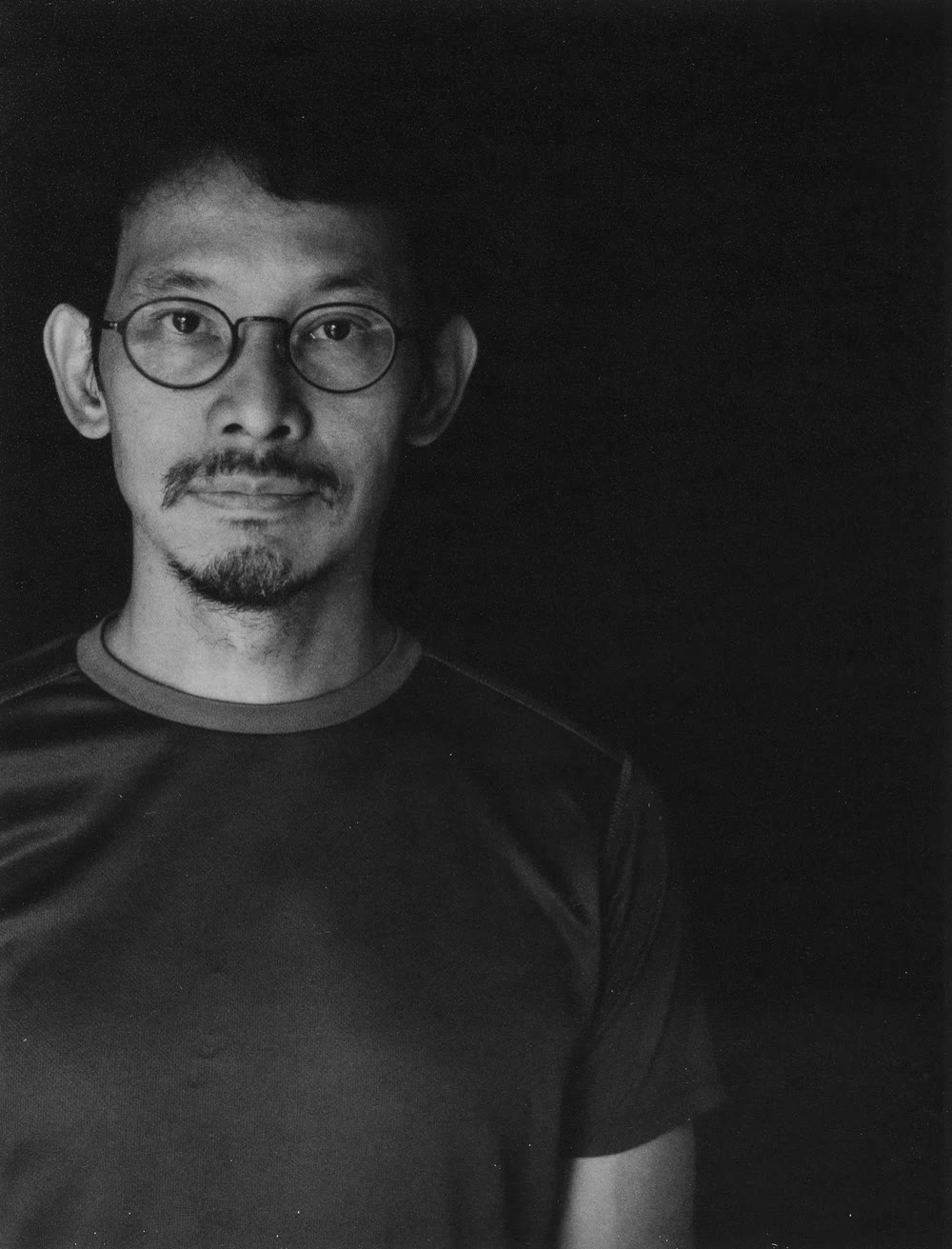
Black and white portrait of Hiroshi Yamaguchi
Hiroshi Yamaguchi

CV

Current

  • Director, KOITOYA Design/Make/Teach, Canberra (2016–today)
  • Organiser, Mono Mori Network for the sustainable use of Japanese hardwood forests, Gifu (2006–today)

Making

  • Furniture maker, Thor's Hammer, Canberra (2012–2016)
  • Visiting artist, ANU School of Art, Furniture Department, Canberra (2012–2015)
  • Self-employed furniture maker, Saitama (2000–2001)
  • Furniture maker, Gamma Doura, Melbourne (1999)
  • Traditional sliding door maker, Hida (work experience, 1998)
  • Furniture maker, Made In Japan, Melbourne (1998)

Teaching

  • KOITOYA woodworking classes, Canberra
  • Casual lecturer, Department of Craft and Furniture Making, Gifu Academy of Forest Science and Culture (2024)
  • Lecturer, Sturt Summer School (2022)
  • Casual lecturer, ANU School of Art – Furniture (2015)
  • Casual lecturer, ANU Centre for Continuing Education (2012–2015)
  • Full-time lecturer, Department of Craft and Furniture Making, Gifu Academy of Forest Science and Culture (2002–2012)

Study

  • Training in Wagata-bon tray making, a lost trade, Ishikawa (2017)
  • Isu-Jyuku chair design course with designer Noboru Inoue, Tokyo (2004)
  • Shinrin Takumi Juku, Takayama (1995–1997): full-time training in furniture making, traditional Japanese woodwork and design
  • BSc Forestry, Hokkaido University (1995)

Exhibitions

  • Craft ACT annual members exhibitions (2020, 2021)
  • Brickworks Artisans and Designers Exhibition, Canberra (2014, 2015)
  • Hearts Leaves Arrows, Yoshida Kobo, Mino (2012)
  • Kaze to Tsuchi no Katachi, NPO Arts Planet Plan, Iga, Mie (2008–2018)
  • Chair Design School (Isujuku) Exhibition, Tokyo (2004–2008)
  • Japanese Life Style, Gifu, Tokyo and Okayama (2002–2007), a six-year project reinterpreting old Japanese crafts and design

Public commissions

  • Jia-Chen wood dragon, Chinese New Year street sculpture, Woolley Street, Canberra (2024)
  • Courtyard bench, ANU HC Coombs Building, Canberra (2023)
  • Mulligan's Flat Nature Reserve learning centre, Canberra (2021–2022)
  • Paperclip boardroom table, Australian Catholic University, Canberra (2020)
  • Soramame bench, Mino Kindergarten (2013)
  • Japan Wooden Architecture Award trophy, Tokyo (2009)
  • Stripe Bench, Nagoya University Museum (2008)
  • Mino Niwaka-Chaya furniture (2007)
  • Triangle stool, Ogaki City Art Biennale (2006)
  • Screens, Mino Street Art Project (2004)

Community projects

  • Jiyu Gakuen project (2017): three years working with staff and students to make 300 sets of furniture from sustainable hardwood, with students involved in every step from forestry field trips to design and making

Selected work

Learn with Hiroshi in 2027

Hiroshi leads the pen case classes in Hobart and works alongside Yuji in Sydney and Canberra.

See the 2027 workshops