

2027 workshops · Sydney, Canberra, Hobart

Japanese Joints (Tsugite) with Yuji Kanesada & Hiroshi Yamaguchi

Cut a traditional Japanese joint by hand under a carpenter who builds and restores Japan's temples, teahouses and timber houses.

  • WhenJanuary–February 2027
  • WhereSydney, Canberra and Hobart
  • LevelBeginner to intermediate
  • Class size12 places in Sydney, 14 in Canberra, 10 in Hobart

The workshop

Learn tsugite from a temple carpenter

JTA, the Australian Wooden Boat Festival and KOITOYA Design/Make/Teach are proud to host master carpenter Yuji Kanesada from Gifu, Japan, for a series of hands-on workshops in Sydney, Canberra and Hobart in January and February 2027.

Yuji builds minka, traditional Japanese farmhouses made entirely from timber and held together by joinery, wooden pins and wedges. Those joints give the houses the strength and flexibility to stand for centuries. He worked on temple buildings early in his career, and he teaches in English.

He's joined by Hiroshi Yamaguchi, a Canberra furniture designer and maker trained in Japan. The two have been friends since they began their apprenticeships in Gifu around the same time. Hiroshi leads some classes and works alongside Yuji in the rest.

Each day focuses on a different joint or project. You'll use Japanese saws, chisels and planes, and learn the history behind each joint as well as how to cut it. The classes suit beginners and intermediate woodworkers. Book one day or several, in one city or across all three.

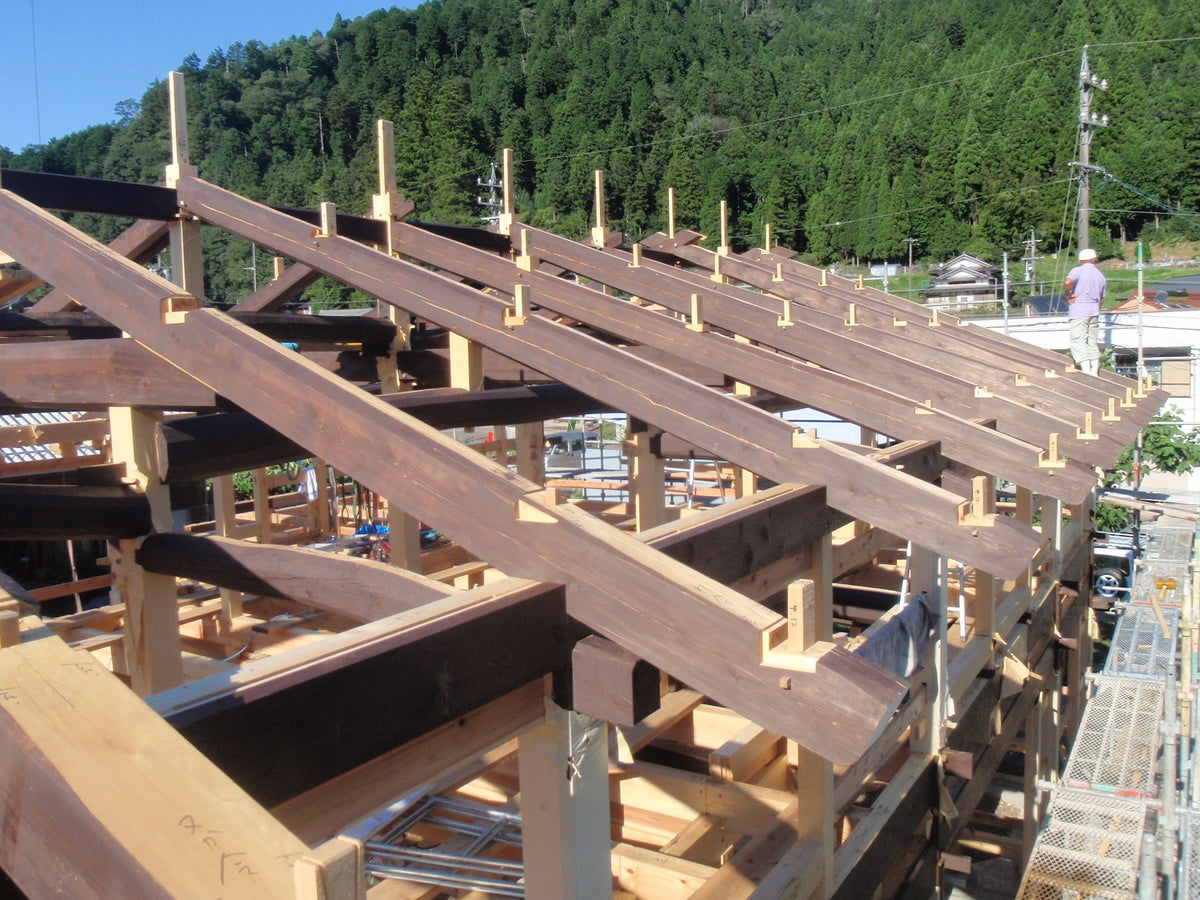
A traditional Japanese timber frame under construction

Seen on Instagram

5.4M views

No nails, no glue, no screws

More than 5 million people have watched this joint come together on Instagram. In this workshop you cut one yourself, by hand, with Japanese saws, planes and chisels.

Get notified

Classes by city

Three cities, eight classes

Each day is a different joint or project and stands on its own. Book one day or join several, in one city or across all three.

Sydney

Japanese Tools Australia29 Production Ave, Kogarah NSW 2217

  • 9am–4pm
  • $580 per day

Maruta-keta Neji-Gumi

丸太桁の捻組

A twist joint for a round cross beam, used in sukiya-style buildings such as tea houses.

Tutor: Yuji Kanesada

More about this class

This unusual joint is used in sukiya-style buildings, the refined style of the tea house. It works like a puzzle: a complex solution worked out entirely with traditional Japanese carpentry methods, and well worth experiencing for yourself.

Yuji's evening talk on building tea houses, the same day, tells the story behind it.

Kawai Tsugite

河合継手

A modern geometric puzzle joint that connects square stock in a line or at right angles.

Tutor: Yuji Kanesada

More about this class

Designed by Professor Naoto Kawai in the 1970s and 80s, this joint is a clever geometric puzzle and a modern design rather than an ancient temple joint.

It lets square timber connect in a straight line or at right angles, in several different orientations.

See the joint on airdiy.net

Osaka Castle Gate Post Joinery

大阪城追手門控え柱継手

The splice in a support pillar of Osaka Castle's Otemon Gate, one of the most complex joints in Japanese carpentry.

Tutor: Yuji Kanesada

More about this class

Osaka-jō Ōtemon hikae-bashira tsugite is the splice in a support pillar of Osaka Castle's Ōtemon Gate. With its unique interlocking system, it's one of the most complex and fascinating examples of Japanese joinery.

How it was put together was one of the great mysteries of Japanese carpentry until 1983, when the pillar was X-rayed.

Canberra

KOITOYA Design/Make/Teach4/18 Maryborough Street, Fyshwick ACT 2609

  • 9am–4pm
  • $580 per day

Secret of the Sashigane

指金と規矩術

Learn the basics of the sashigane and kikujutsu through two projects: a hitosumi-giri cut and a compound-angled box.

Tutor: Yuji Kanesada

More about this class

The sashigane is more than a square. Its scales can find a circumference and work out compound angles, and its secrets lie in kikujutsu, the traditional Japanese method of measuring and marking timber.

Yuji teaches the basics through two simple hands-on projects: a hitosumi-giri cutting exercise and a box with compound-angled sides. Kikujutsu is a deep tradition and isn't learned in a day, but this beginner-friendly class is a fun first step, with plenty of Yuji's knowledge along the way.

New to the sashigane? Read our guide, Square or sashigane?

Useful videos: 1 · 2 · 3

Hobart

Australian Wooden Boat FestivalWatermans Dock, Murray Street Carpark

  • 9:30am–4pm
  • $480 per day

Held during the festival. Yuji teaches the joints, and Hiroshi teaches a pen case inspired by each joint.

Kanawa Tsugi

金輪継ぎ

One of the strongest traditional joints for lengthening a beam.

Tutor: Yuji Kanesada

More about this class

Kanawa tsugi is one of the strongest traditional joints for extending the length of a beam. Both halves are exactly the same shape, which gives the finished joint a clean, beautiful look, and a pin locks them together.

Kanawa Pen Case

An award-winning pen case design by Masashi Kutsuwa, based on the kanawa tsugi joint.

Tutor: Hiroshi Yamaguchi

More about this class

Based on the traditional kanawa tsugi joint, this class makes an award-winning pen case designed in 2007 by Masashi Kutsuwa, Hiroshi's former colleague. The design won at the Takaoka Craft Competition in 2008.

The project is challenging, but Hiroshi supports you through it with purpose-made jigs, so beginners are welcome. Intermediate woodworkers get specialist practice with Japanese saws, chisels and planes, plus the cultural background behind the design.

About Masashi Kutsuwa: professor of woodwork at the Gifu Academy of Forest Science and Culture and representative director of Ginowa, an organisation that preserves traditional crafts and the tools behind them. After eight years as a director in NHK's news department, he trained in woodworking in Takayama and worked as a furniture maker in the UK for five years before teaching. His books include Van Gogh's Chair and Green Woodwork.

5% of sales from this class are donated to Ginowa's craft conservation work.

Miyajima Tsugi

宮島継ぎ

A joint from the region around Miyajima, Hiroshima, shaped to look discreet on three exposed sides.

Tutor: Yuji Kanesada

More about this class

Miyajima tsugi was often used in the region around Miyajima in Hiroshima Prefecture. It's an unusual joint, used where three sides are on show, and shaped to keep the joint as discreet as possible once assembled.

You'll take home a simple, beautiful sample piece.

Miyajima Pen Case

An award-winning pen case design by Masashi Kutsuwa, based on the miyajima tsugi joint.

Tutor: Hiroshi Yamaguchi

More about this class

Based on the traditional miyajima tsugi joint, this class makes an award-winning pen case designed in 2007 by Masashi Kutsuwa, Hiroshi's former colleague. The design won at the Takaoka Craft Competition in 2008.

The project is challenging, but Hiroshi supports you through it with purpose-made jigs, so beginners are welcome. Intermediate woodworkers get specialist practice with Japanese saws, chisels and planes, plus the cultural background behind the design.

About Masashi Kutsuwa: professor of woodwork at the Gifu Academy of Forest Science and Culture and representative director of Ginowa, an organisation that preserves traditional crafts and the tools behind them. After eight years as a director in NHK's news department, he trained in woodworking in Takayama and worked as a furniture maker in the UK for five years before teaching. His books include Van Gogh's Chair and Green Woodwork.

5% of sales from this class are donated to Ginowa's craft conservation work.

Evening talks

Hear Yuji speak

Alongside the classes, Yuji gives evening talks about the buildings he has worked on.

  • Sydney, Japanese Tools Australia

    Making a Tea House: from Yuji Kanesada's experience

  • Canberra, KOITOYA

    Making a Tea House: from Yuji Kanesada's experience

  • Hobart, AWBF Symposium

    Sustainable forestry and building a traditional minka farmhouse

    Title and date to be confirmed.

Your teachers

Learn from working craftsmen

Yuji Kanesada

Yuji Kanesada

Traditional carpenter, Gifu, Japan

Yuji is a daiku (Japanese carpenter) from Gifu and a builder of minka, the traditional timber houses that still stand centuries after they were built. They're made entirely from timber and held together by joinery, wooden pins and wedges, which gives them the strength and flexibility to outlast their builders.

In his early years Yuji worked on temple buildings, and he has since worked on more than a dozen buildings of religious, cultural or historical significance across Japan. He teaches in English and shares the history behind each joint as well as how to cut it.

Hiroshi Yamaguchi

Hiroshi Yamaguchi

Furniture designer and maker, KOITOYA, Canberra

Hiroshi trained and worked in Takayama, a town famous for its carpentry, and spent 17 years designing, making and teaching furniture and craft in Japan. He moved to Canberra in 2012 and founded KOITOYA in 2016, a studio workshop for furniture, architectural work and woodwork classes built on traditional Japanese skills.

Hiroshi and Yuji are long-time friends: they began their apprenticeships in different parts of Gifu at around the same time. Hiroshi has taught at JTA every year since 2018. He leads the pen case classes in Hobart and works alongside Yuji in the others.

In partnership with

  • KOITOYA Design Make Teach
  • Australian Wooden Boat Festival

Dates coming soon

Be first to hear when booking opens

We're finalising the January–February 2027 dates in Sydney, Canberra and Hobart with Yuji and Hiroshi. Leave your email and we'll tell you before we announce them to everyone else, so you get first pick of the days.

We'll also send you occasional JTA news. Unsubscribe at any time.

The details

Everything you need is supplied

Included

  • All timber, including Japanese hinoki and Australian blackwood
  • Use of Japanese saws, planes and chisels
  • The joint you make, to take home

Good to know

  • Suits beginners and intermediate woodworkers
  • Held in Sydney, Canberra and Hobart: see each city above for the venue and class hours
  • You're welcome to bring your own sharpened tools, marked with your name

Inside the last class

See what a day in the workshop looks like

Gallery

From past classes and Yuji's work in Japan

Questions

Before you book

Do I need woodworking experience?

No. The classes suit beginners and intermediate woodworkers. Yuji and Hiroshi work around the room and help each student through every step.

Do I need to bring tools?

No. All tools and timber are supplied. You're welcome to bring your own Japanese tools: mark them so they go home with you, and bring them sharp and ready to use.

Can I book more than one day?

Yes. Each day teaches a different joint and stands on its own, so you can book one day or as many as you like. The classes are spread across three venues in Sydney, Canberra and Hobart, so check the city before you book.

What if I can't make it?

Please read our class cancellation policy before you book.