


Japanese kitchen knives
Find the Japanese knife that suits the way you cook.
Hand-sharpened knives from Japan’s great blade-making towns, from Seki to Sakai. Start with the shape, then compare steel, maker and price. Every knife ships the same day from our Sydney showroom.
- Made in Japan
- Hand sharpened
- 14-day returns

Step 1 · Choose a shape
Which shape is right for you?
Japanese knives are named for what they do best. Most cooks start with a gyuto or santoku, then add a petty for small jobs.
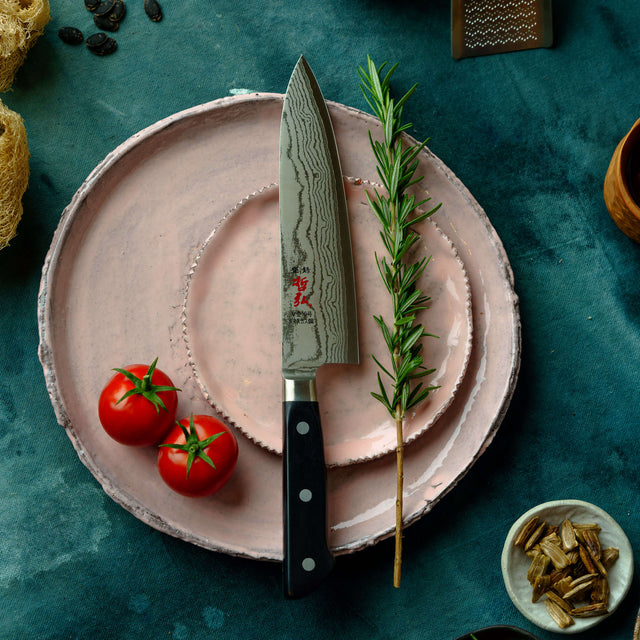
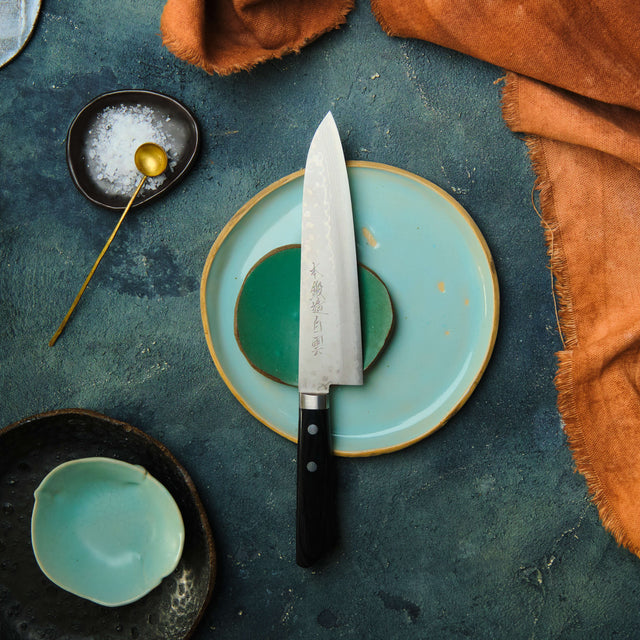
Gyuto 牛刀
“Beef sword”: the chef’s knife
The all-rounder. A long, gently curved edge for slicing meat, rocking through herbs and dicing almost anything. Choose this if you want one knife for everything.
Blade length: 180–240mm
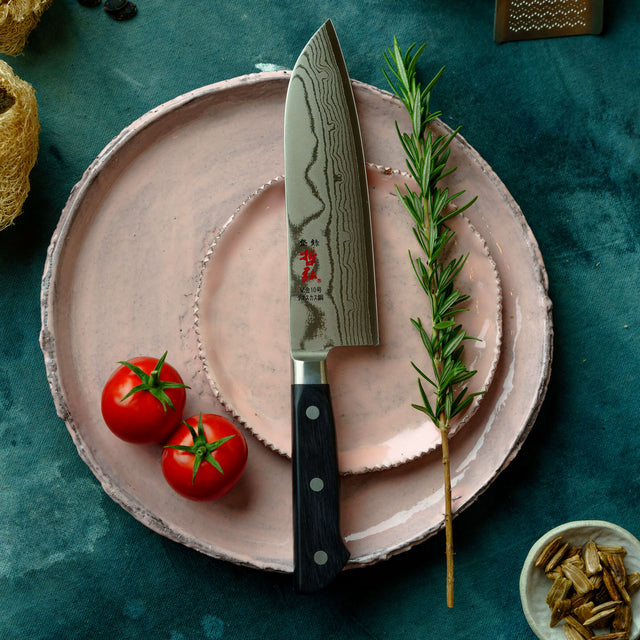
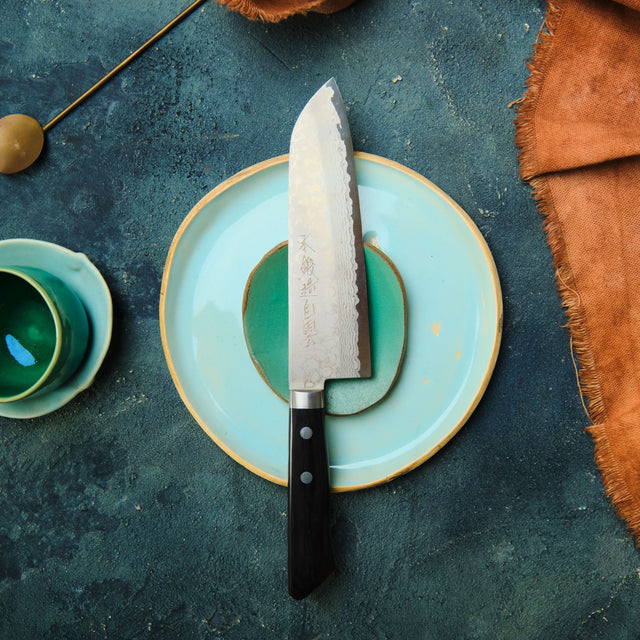
Santoku 三徳
“Three virtues”: meat, fish and veg
Japan’s favourite home knife. Shorter and flatter than a gyuto, with a dropped tip, so it’s nimble on a smaller board and great for up-and-down chopping.
Blade length: 165–180mm
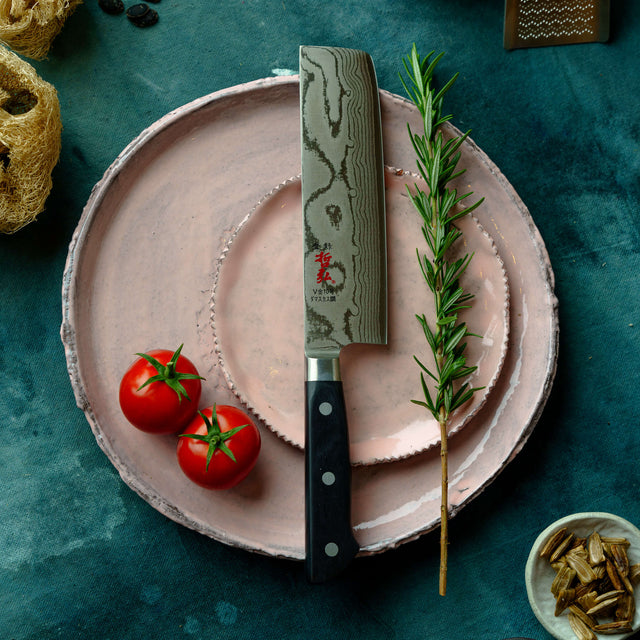
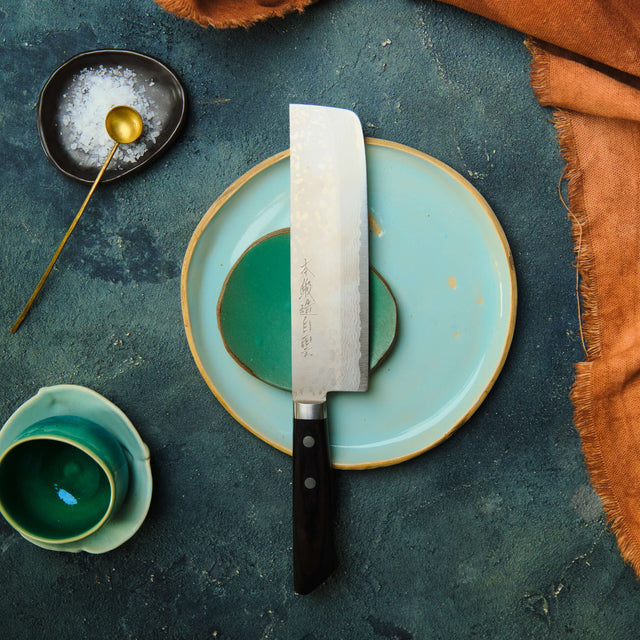
Nakiri 菜切
“Vegetable cutter”
A flat, rectangular blade that meets the board along its whole length. Push-cut through cabbage, onions and pumpkin, then scoop everything up on the wide blade.
Blade length: 160–165mm
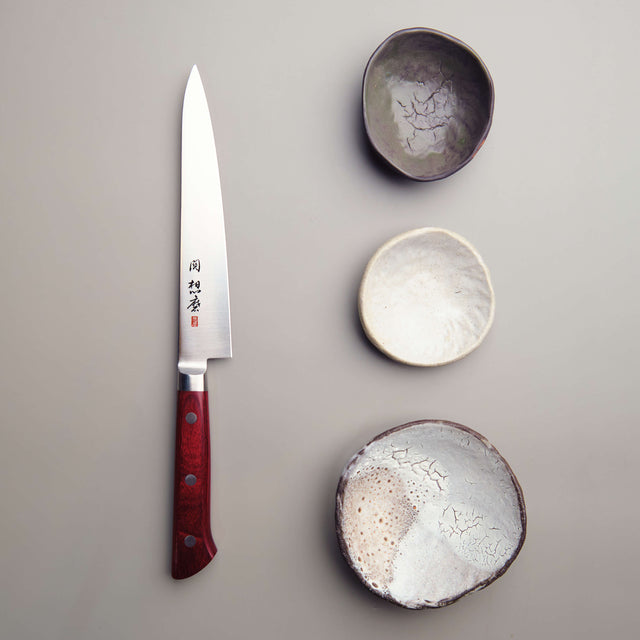
Petty ペティ
The small utility knife
For the jobs a big knife is clumsy at: fruit, shallots, garlic, herbs, trimming and peeling. The perfect partner to a gyuto or santoku.
Blade length: 80–150mm
Bunka 文化
“Culture”: a santoku with a sharp tip
A santoku with an angled, reverse-tanto tip for fine tip work like scoring, julienne and slicing shallots, plus a broad blade for everything else.
Blade length: 190mm
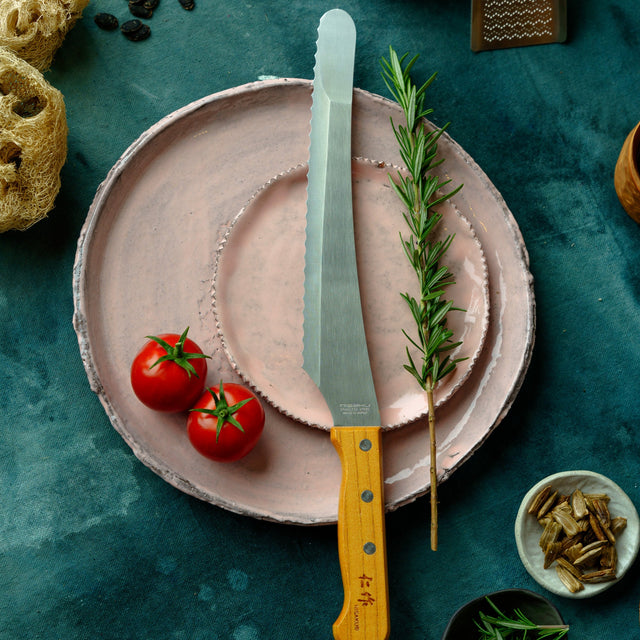
Bread パン切り
The wave-edge bread knife
A wave-shaped edge that bites through crusty sourdough without crushing the crumb, and handles tomatoes and soft fruit too.
Blade length: 240mm
Step 2 · Pick your knife
Every knife, by shape and maker
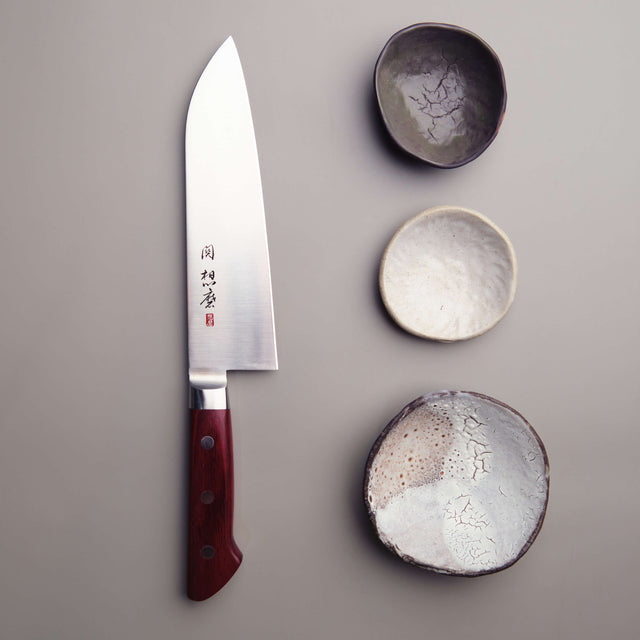
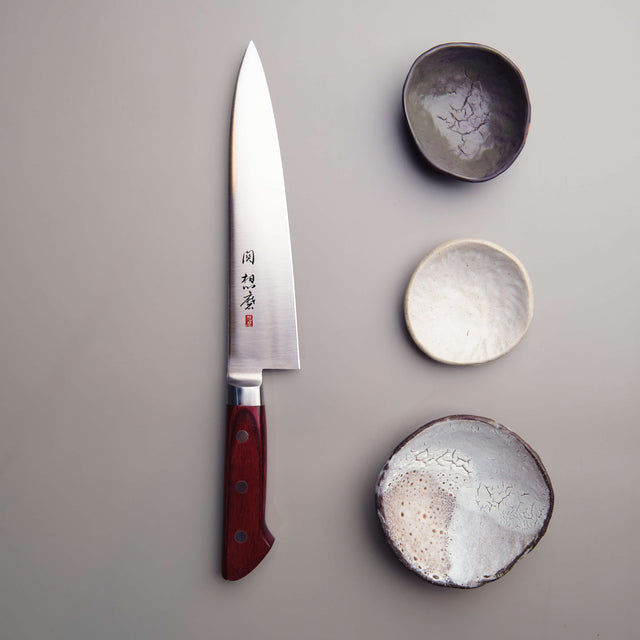
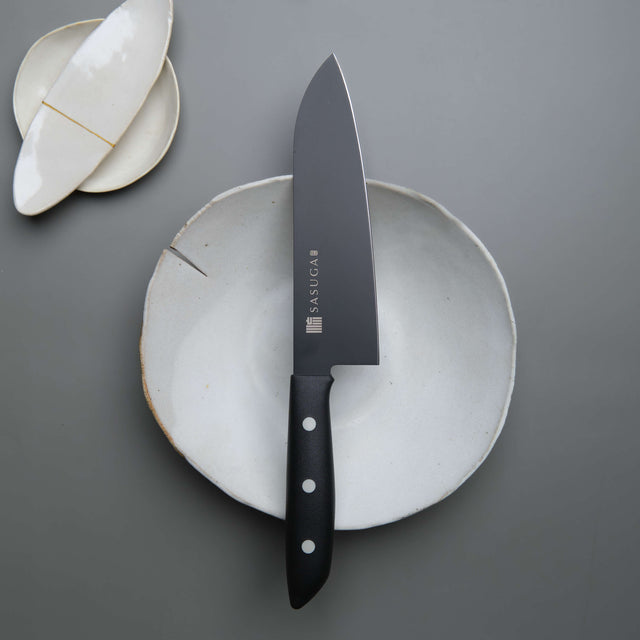
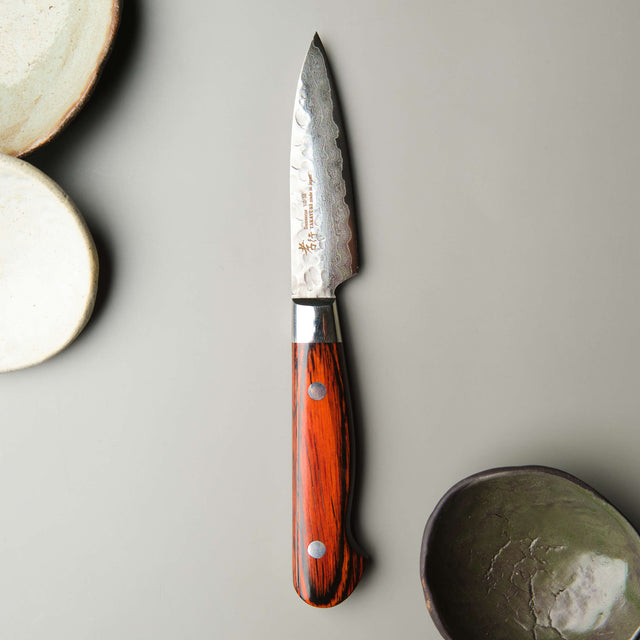
Sakai Takayuki · Sakai, Osaka
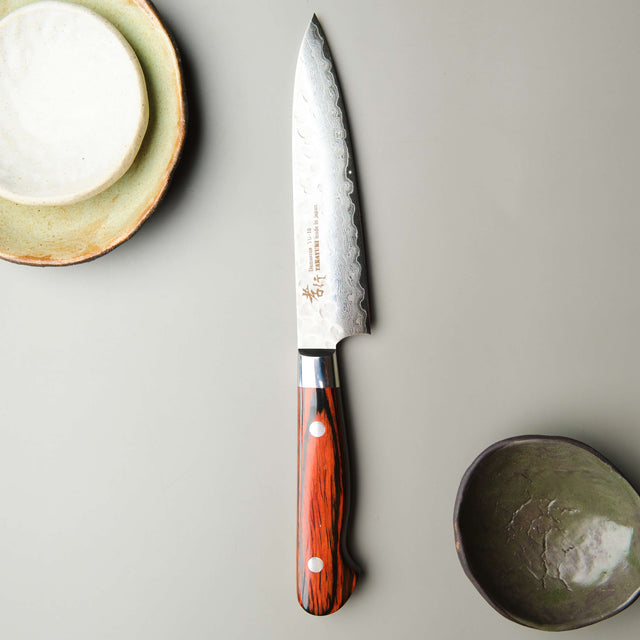
Hammered Damascus Petty Chef Knife - 80mm
- 33-layer VG10 Damascus
- HRC 60
5.0 (1)
$185
Sakai Takayuki · Sakai, Osaka
Hammered Damascus Petty Chef Knife - 120mm
- 33-layer VG10 Damascus
- HRC 60
5.0 (1)
$195
Sakai Takayuki · Sakai, Osaka
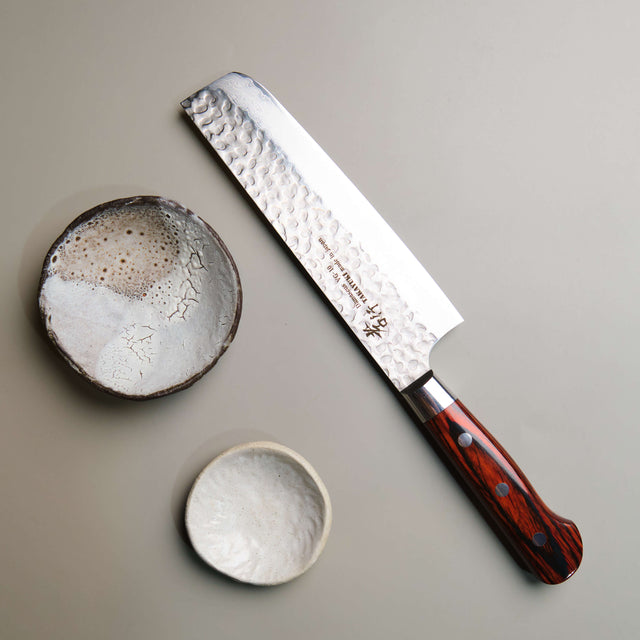
Hammered Damascus Nakiri Chef Knife - 160mm
- 33-layer VG10 Damascus
- HRC 60
$285
Sakai Takayuki · Sakai, Osaka
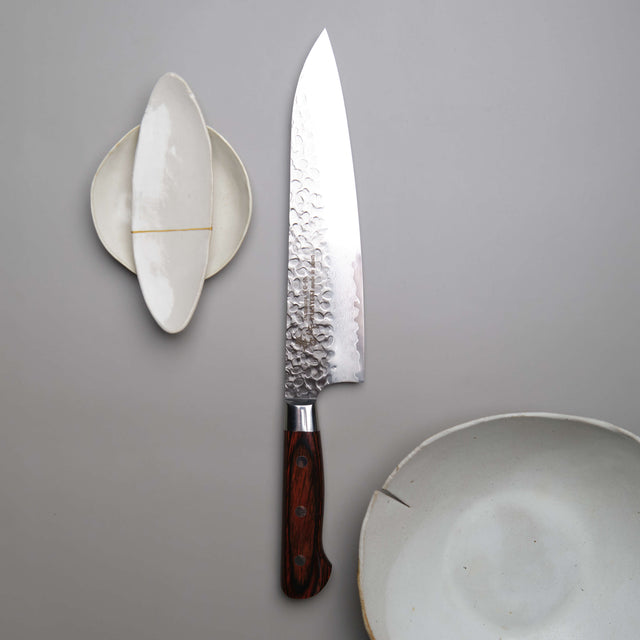
Hammered Damascus Gyuto Chef Knife - 210mm
- 33-layer VG10 Damascus
- HRC 60
$298
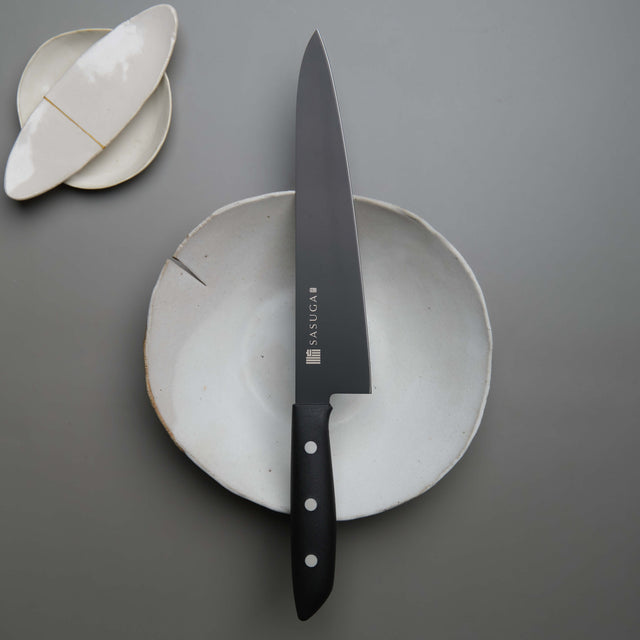
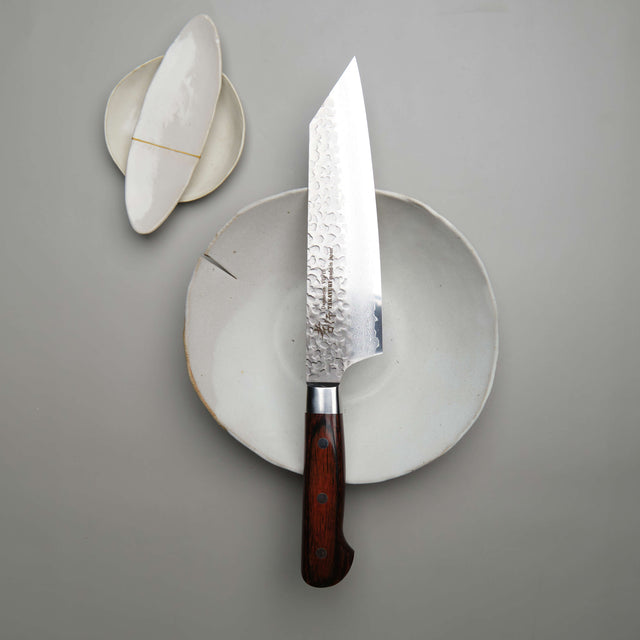
Sakai Takayuki · Sakai, Osaka
Hammered Damascus Bunka Chef Knife - 190mm
- 33-layer VG10 Damascus
- HRC 60
$298
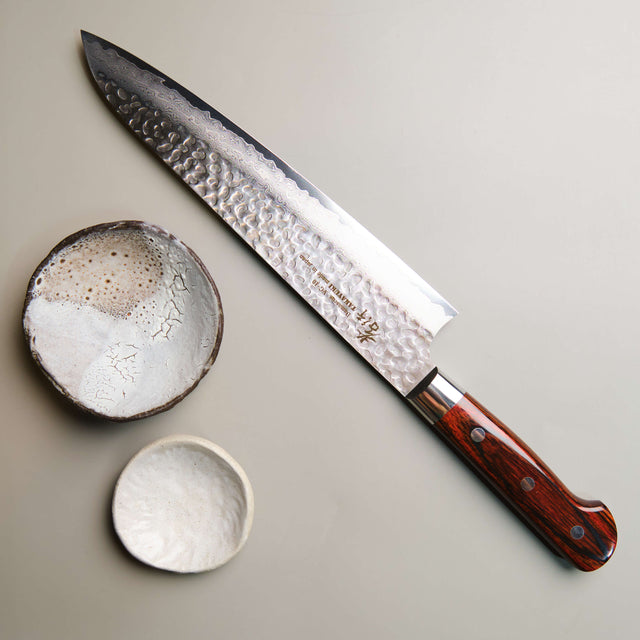
Sakai Takayuki · Sakai, Osaka
Hammered Damascus Gyuto Chef Knife - 240mm
- 33-layer VG10 Damascus
- HRC 60
$345
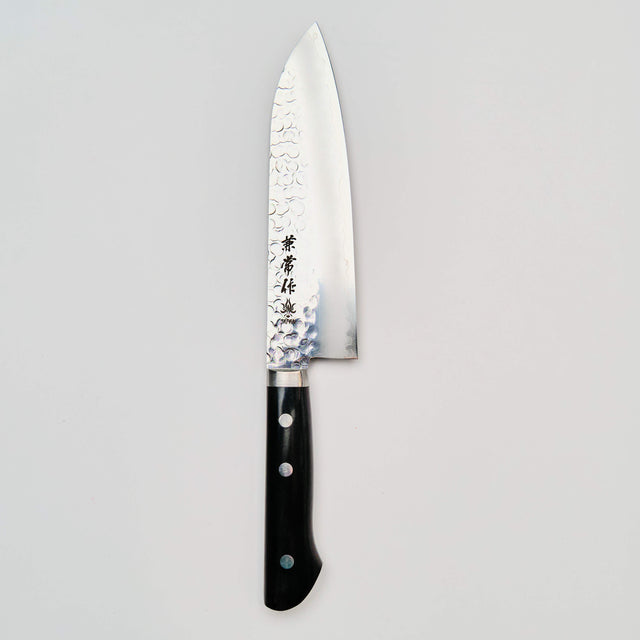
Kanetsune Seki · Seki, Gifu
Kanetsune Santoku Chef Knife - 165mm
- VG-1 core, tsuchime finish
- HRC 59–60
Sold out
View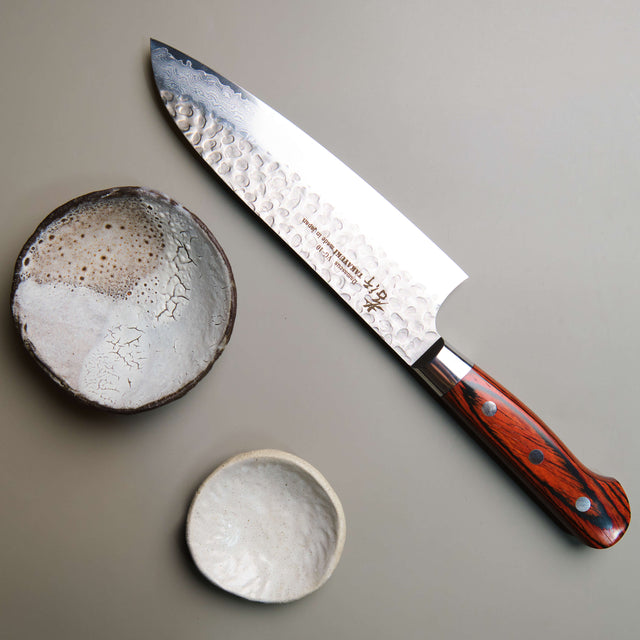
Sakai Takayuki · Sakai, Osaka
Hammered Damascus Santoku Chef Knife - 180mm
- 33-layer VG10 Damascus
- HRC 60
Sold out
ViewNo knives match that combination.
The makers
Our knife makers, compared
All our knives are made in Japan’s great blade-making towns. Here’s how they compare.
| Maker | Made in | Steel | Hardness | Handle | Character | Shop |
|---|---|---|---|---|---|---|
| Sakai Takayuki | Sakai, Osaka | 33-layer VG10 Damascus | HRC 60 | Mahogany | Aoki Hamono, founded 1946 in Sakai, the city most Japanese professional chefs buy from. A hammered (tsuchime) Damascus finish that releases food, and hand sharpened. | |
| Miki Hamono | Miki, Hyogo | 17-layer VG10 Damascus | HRC 60–61 | Black wood, stainless rivets | A small forge in Miki, one of Japan’s great blacksmithing towns, since 1935. A very fine VG10 blade that holds its edge beautifully. | |
| Tetsuhiro | Sanjo, Niigata | VG10 clad Damascus | – | Black pakka wood | Made by Kiryu Industry, knife makers in the metalworking town of Sanjo since 1927. A thin, fine blade with a familiar western handle. | |
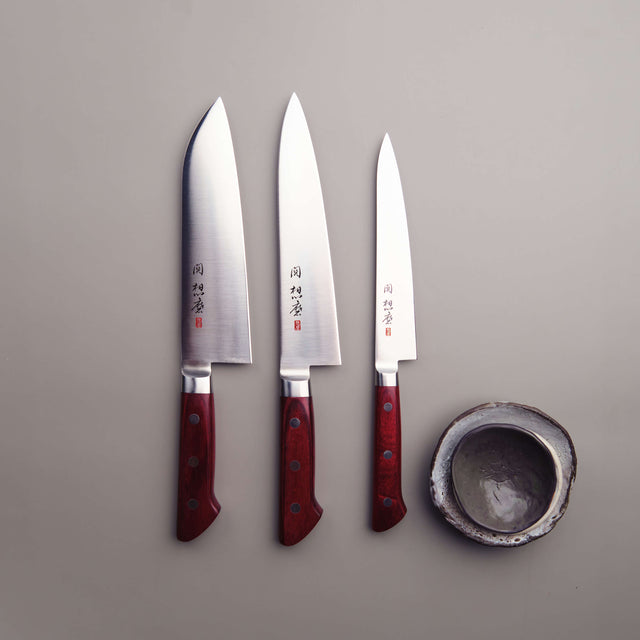
| Seki Souma | Seki, Gifu | AUS-8 san-mai | HRC 57–58 | Red pakka wood | From Seki, Japan’s cutlery capital. Tough, forgiving AUS-8 steel, hand sharpened and stamped with the Souma seal. The best way into Japanese knives. | |
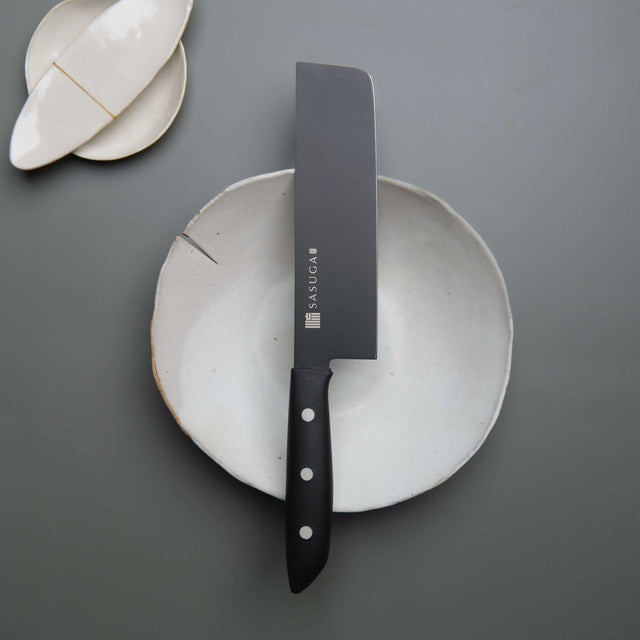
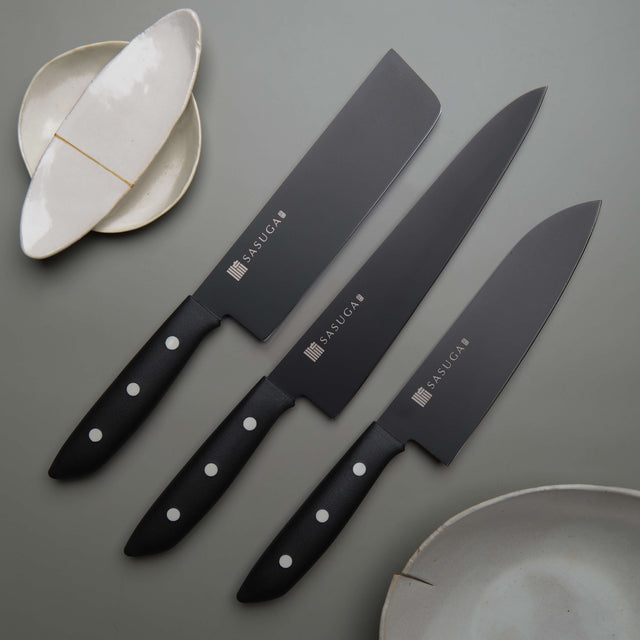
| Sasuga | Japan | Molybdenum-vanadium stainless | – | Black composite, three rivets | A matt black, fluorine-coated blade that resists rust and sticking, and sharpens easily. Great value for a first Japanese knife. | |
| Kanetsune | Seki, Gifu | VG-1 core, tsuchime finish | HRC 59–60 | Wood with stainless bolster | Hon-warikomi clad blades with a hammered tsuchime finish that helps food release from the blade. | |
| Nisaku | Tsubame, Niigata | Stainless steel | – | White oak | Tomita Cutlery, working stainless steel in Tsubame since 1959. Their wave-edge bread knife is one of our best sellers. |
Gifts
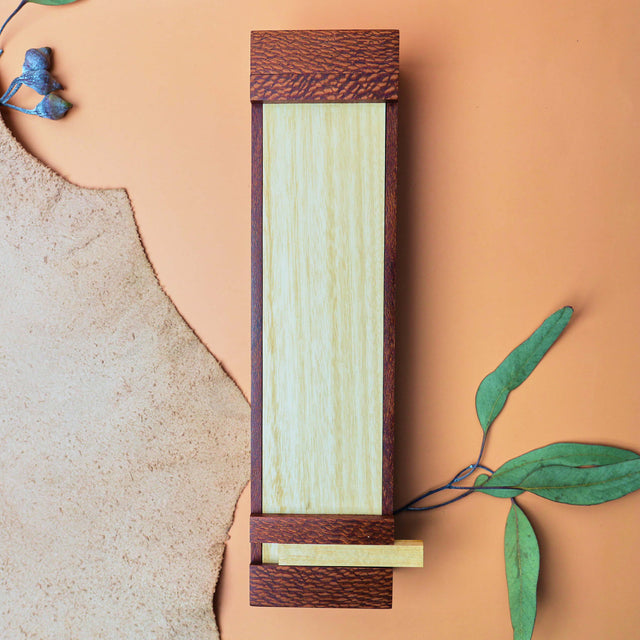
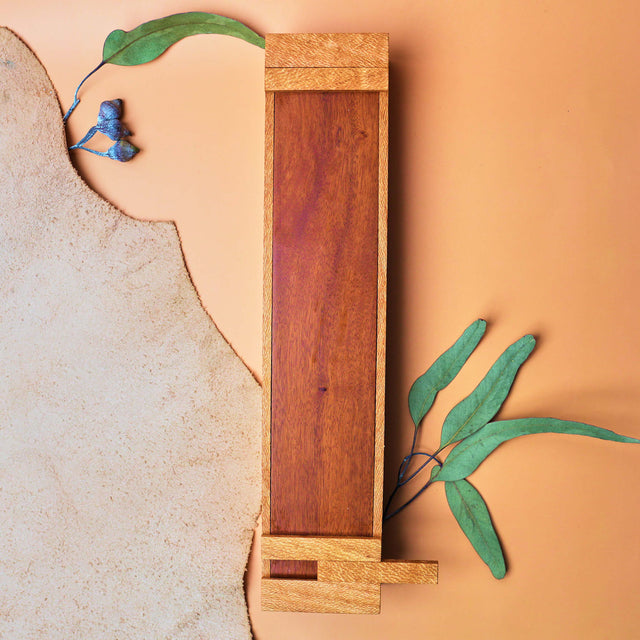
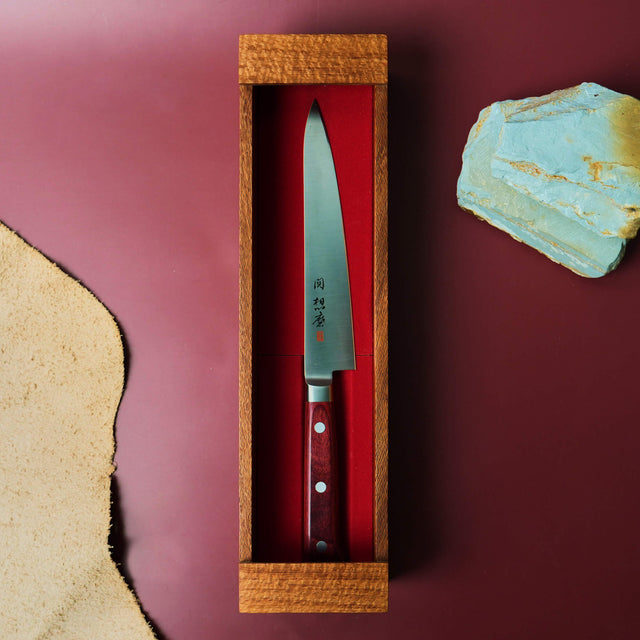
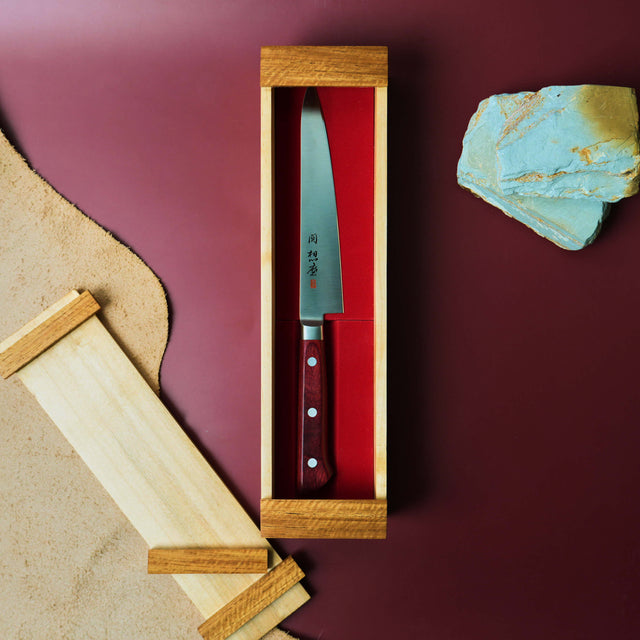
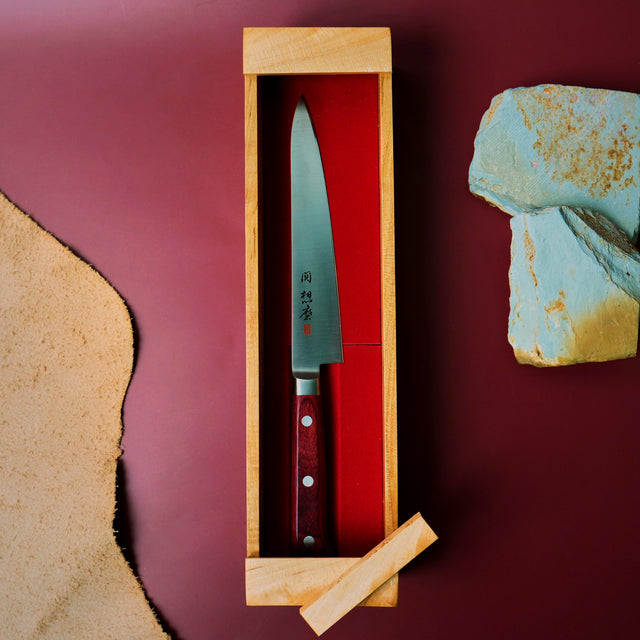
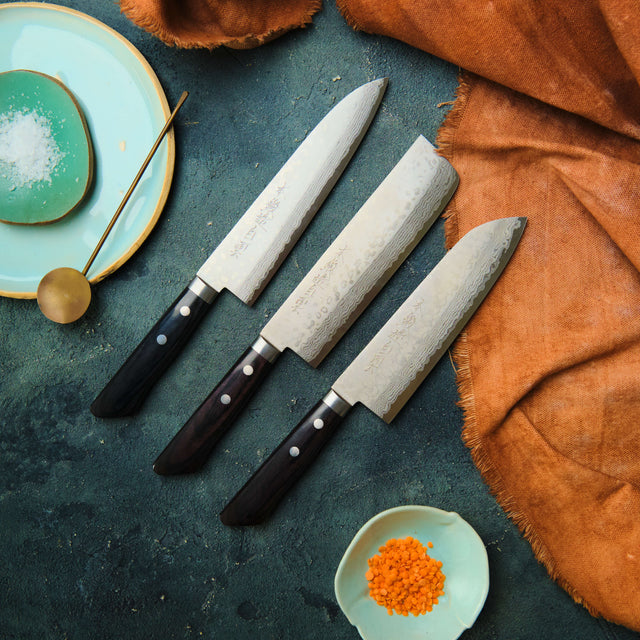
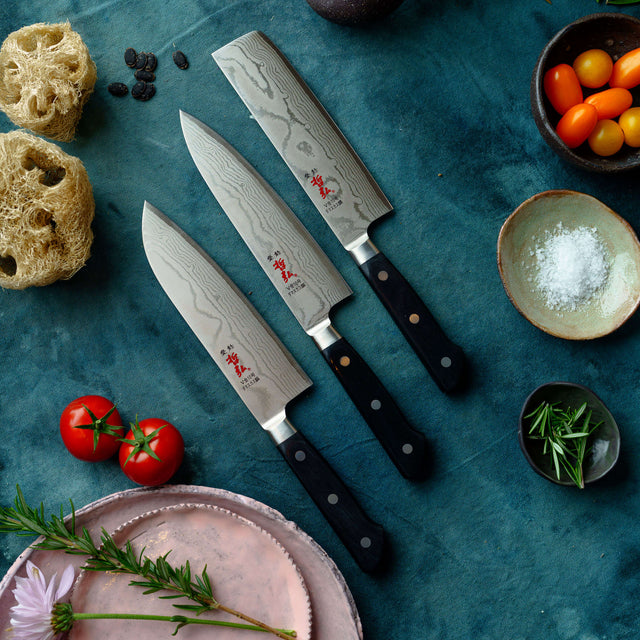
Sets and knife boxes
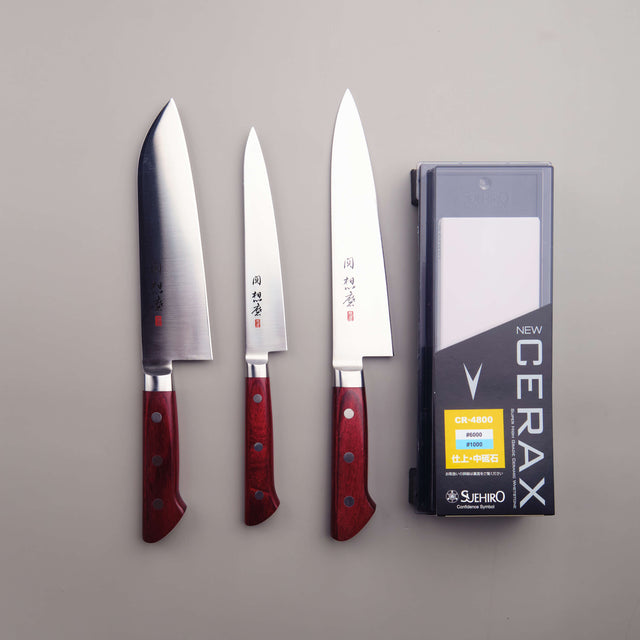
Matched sets save on buying separately, and our handmade wooden knife boxes turn a knife into a gift to keep.
Look after it
Four habits for a knife that lasts a lifetime
-
01
Hand wash, then dry
Wash by hand with warm soapy water and dry straight away. Never put a Japanese knife in the dishwasher.
-
02
Use a wooden or soft board
Timber or soft synthetic boards protect the edge. Glass, stone and steel will chip a hard Japanese blade.
-
03
Slice, don’t twist
Use smooth slicing and push cuts. Avoid prying, twisting, bones and frozen food, which can chip a thin edge.
-
04
Sharpen on a whetstone
A 1000-grit stone brings back the edge; a finer stone polishes it. Little and often keeps it razor sharp.
Questions
Gyuto or santoku: which should I buy first?
If you like long slicing strokes and rocking through herbs, choose a gyuto. If you have a smaller board or prefer straight up-and-down chopping, choose a santoku. Either one, plus a petty for small jobs, covers almost everything in a home kitchen.
Are they suitable for left-handers?
Yes. The knives on this page have double-bevel edges (sharpened on both sides) and western-style handles, so they work in either hand. If you’re unsure about a particular knife, give us a call.
Will they rust?
Every knife here is stainless steel or stainless-clad, so it is far more forgiving than traditional carbon steel. Still, hand wash and dry it after use to keep it looking its best.
What is VG10 and Damascus?
VG10 is a premium Japanese stainless steel that takes a very keen edge and holds it. Damascus knives sandwich that hard core between layers of softer stainless steel, which protects the core and creates the rippled pattern on the blade.
How do I keep it sharp?
Use a 1000-grit whetstone every few weeks of regular use, and a finer stone to polish the edge. Our sharpening kit builder helps you choose stones, or bring your knife to a Hazuki sharpening session.
Do you gift wrap?
Yes, gift wrapping is available on all orders. Our handmade wooden knife boxes also make a knife a very special present.
Shipping and returns
Orders placed before 12pm are dispatched the same day from Sydney, and shipping is free over $200. If you’re not happy, you can return it within 14 days.
Want to hold one first?
Visit our Sydney showroom to feel the weight and balance, or call us on 02 9527 3870.